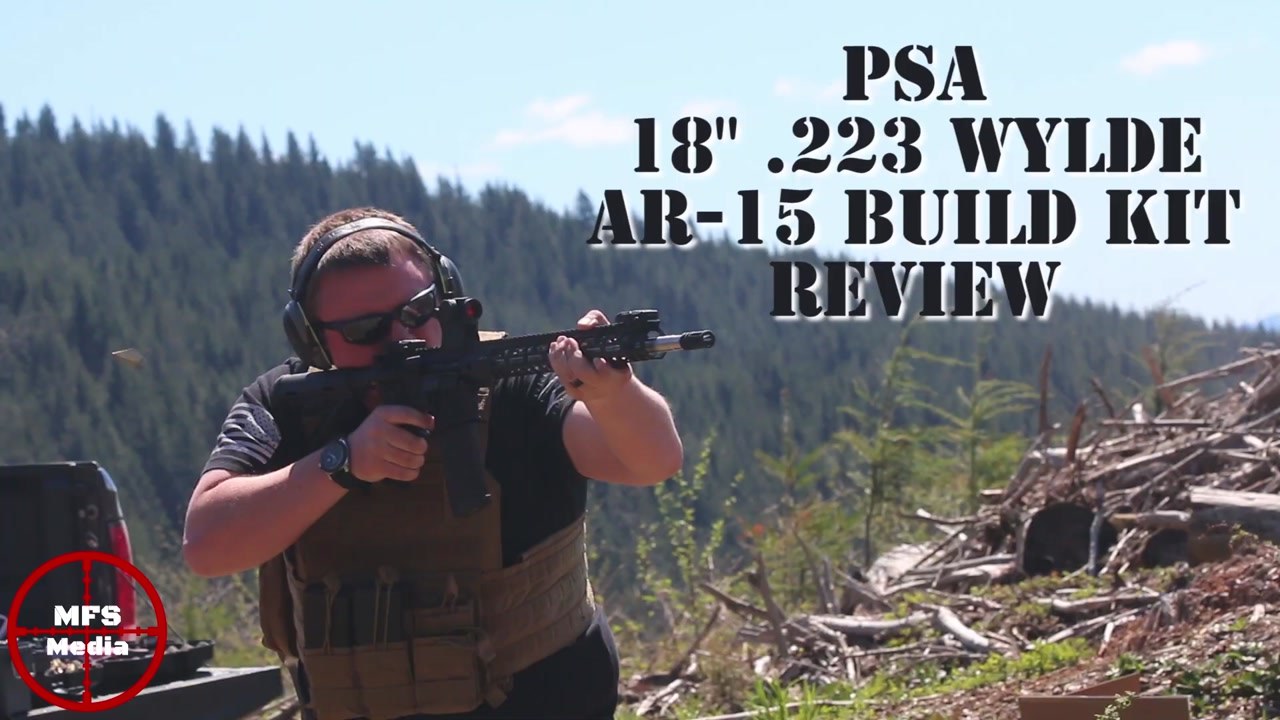
Watch the video on YouTube (15:07)
Today we're taking a look at the Palmetto State Armory .223 Wylde 18-inch build kit with the stainless steel barrel. I spent a few weeks testing one of these kits to see how it performs, and I've got some results for you. The video covers the parts, accuracy at 50 yards with four different loads, and reliability. This write-up goes along with it, plus the factory specs from PSA's current listing.
A quick note on this video: this is a re-upload of my original review from May 2019. The prices and sales I mention in the video are from 2019 and aren't current. Prices change, so check current pricing before you buy.
My setup
Before we get to the table, here's what I changed. I'm running a Primary Arms MD-RBGII (OpticsPlanet or Amazon). It's a pretty budget-friendly red dot, and I've used it exclusively on this rifle for the last month or so.
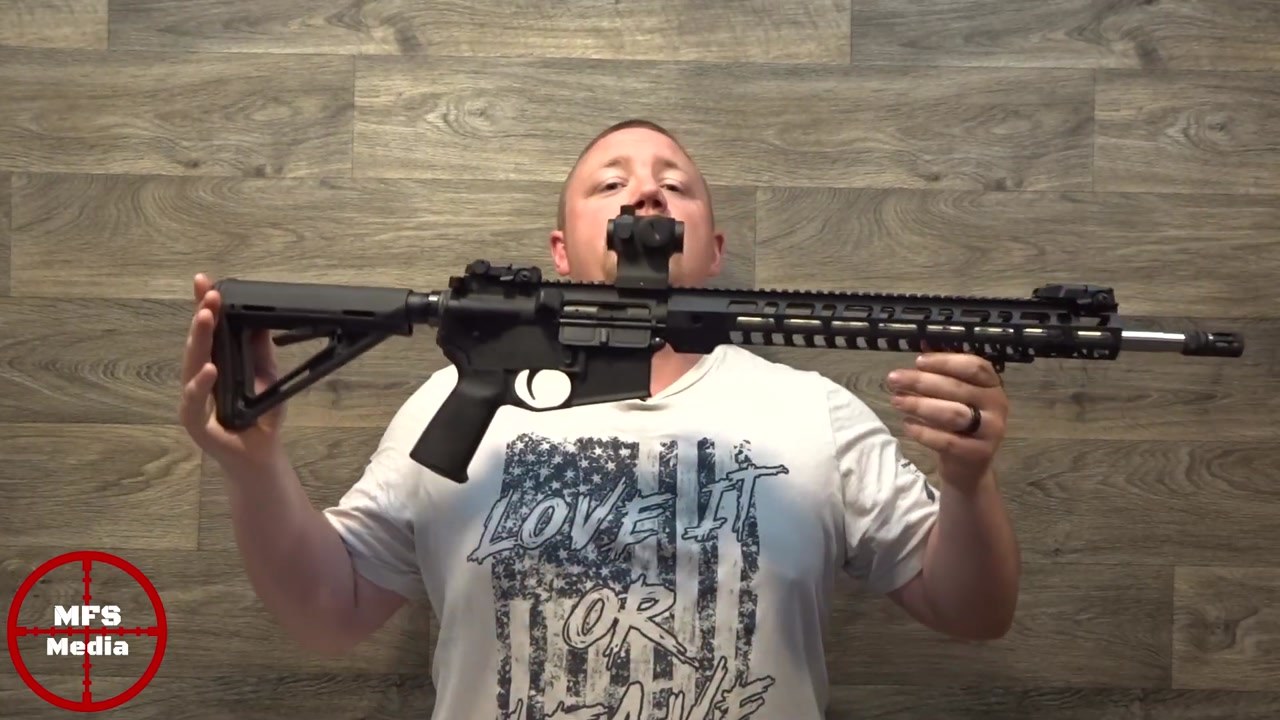
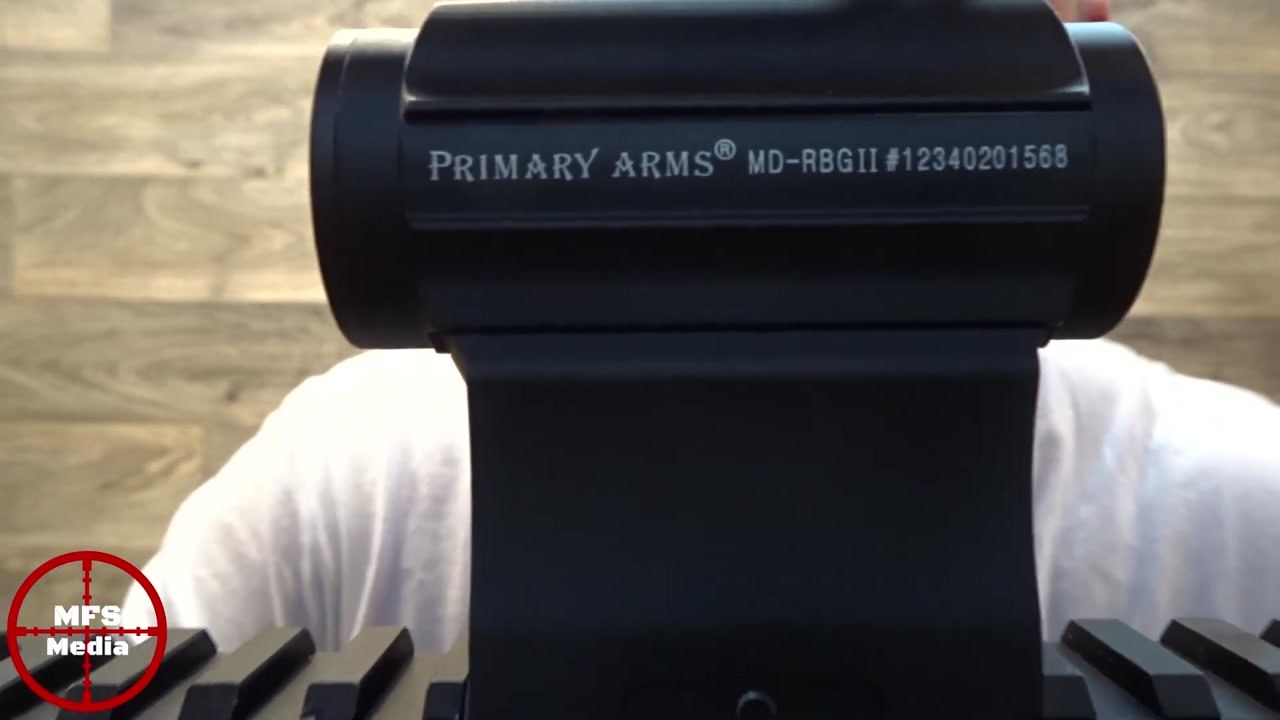
The only other change I've made to the entire kit is a BCM single-point sling adapter, because I run a QD point there and that's how I run my slings.
Everything you see in the video has about 500 rounds through it, and about half of that was suppressed.
The lower
Obviously the lower receiver here does not come with the kit. This one is PSA's Snek-15 lower, with the fun selector markings. (The kit itself is the upper and the parts to build out the lower.)
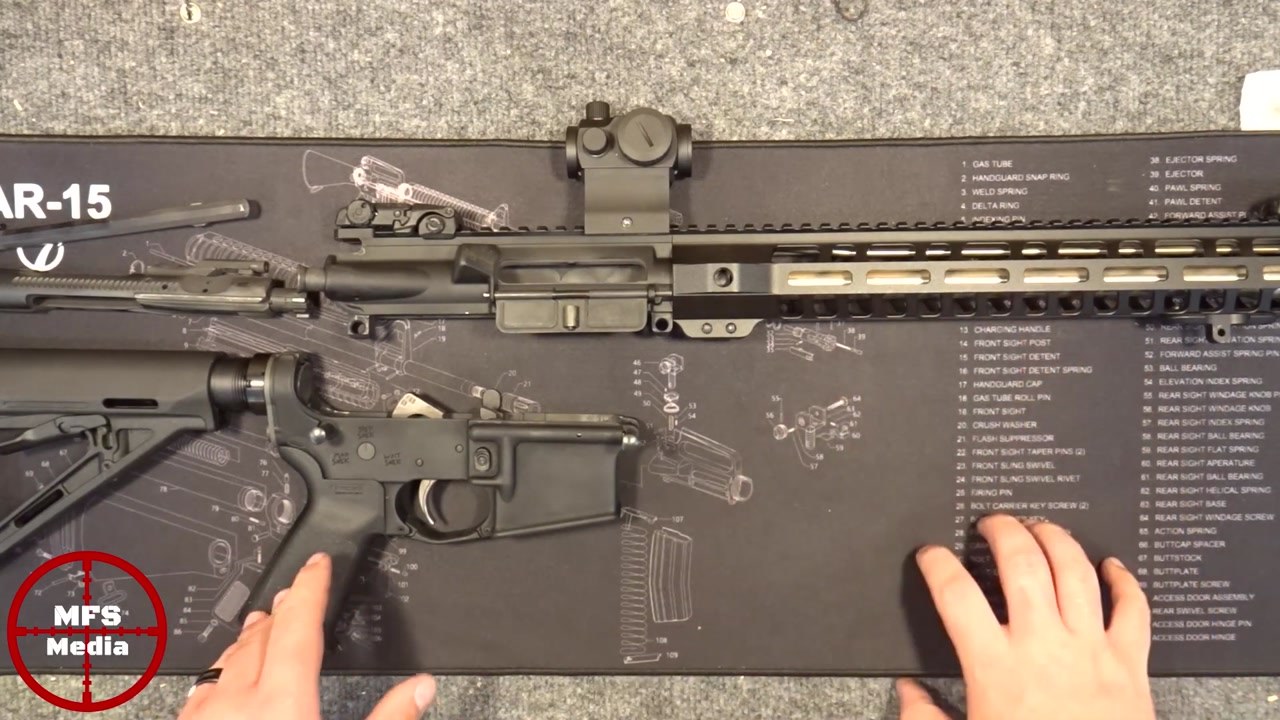
You get a standard mil-spec buffer tube with a carbine buffer spring. Off the top of my head, I can't remember the buffer weight. For furniture, you've got a mil-spec Magpul MOE stock and a Magpul MOE grip (Amazon).
The lower parts kit is just standard stuff, all mil-spec, nothing crazy, other than the trigger group. The one in my kit is PSA's nickel Teflon-coated enhanced fire control group, and for the money, these are great. They're definitely a step up from your mil-spec trigger groups because they're a lot smoother. You'll notice it's a little blackened because I've been firing this suppressed a lot lately, which makes it a lot dirtier, but it cleans up real nice with a brush and a little bit of solvent to get the carbon buildup off.
The trigger pull runs right around 5.5 to 6 pounds, so it's similar to your mil-spec, but it's all about the way it feels. It's not very spongy. It's much more crisp, and it's a nice upgrade.
The upper
The bolt carrier group is a nitride-treated BCG from Palmetto State Armory with a Carpenter 158 steel bolt. That's pretty hard steel, which is kind of what you want. You've got your standard extractor, and everything is staked properly. It's staked very well.
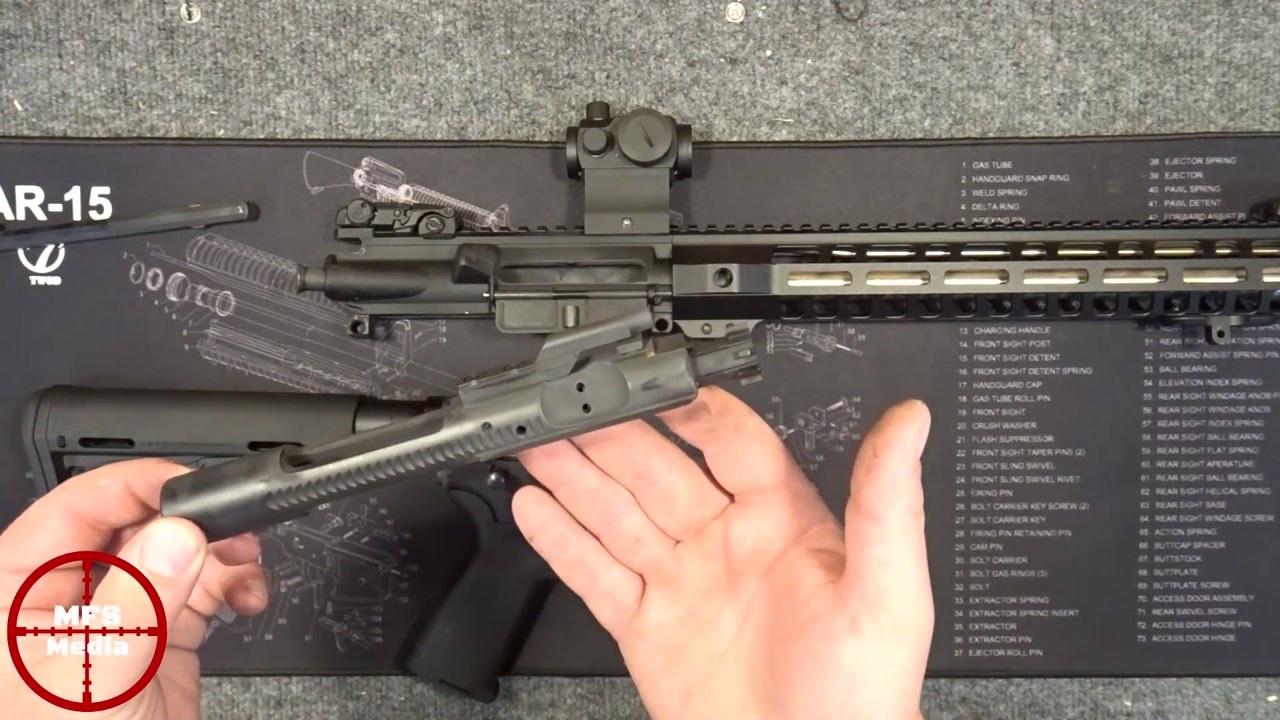
You have a standard mil-spec charging handle, and the upper receiver has a standard dust cover and forward assist.
Here's where some of the bells and whistles come in. It comes with flip-up Magpul MBUS backup iron sights (Amazon), which are still kind of a standard, and I love them. You have a 15-inch M-LOK rail with cuts all throughout it to lighten it up, which is why PSA calls it their lightweight M-LOK rail. It has two QD points, one on each side, so that's nice. It has a rifle-length gas system, which I love, and it comes with a 416R stainless steel barrel and an A2 flash hider.
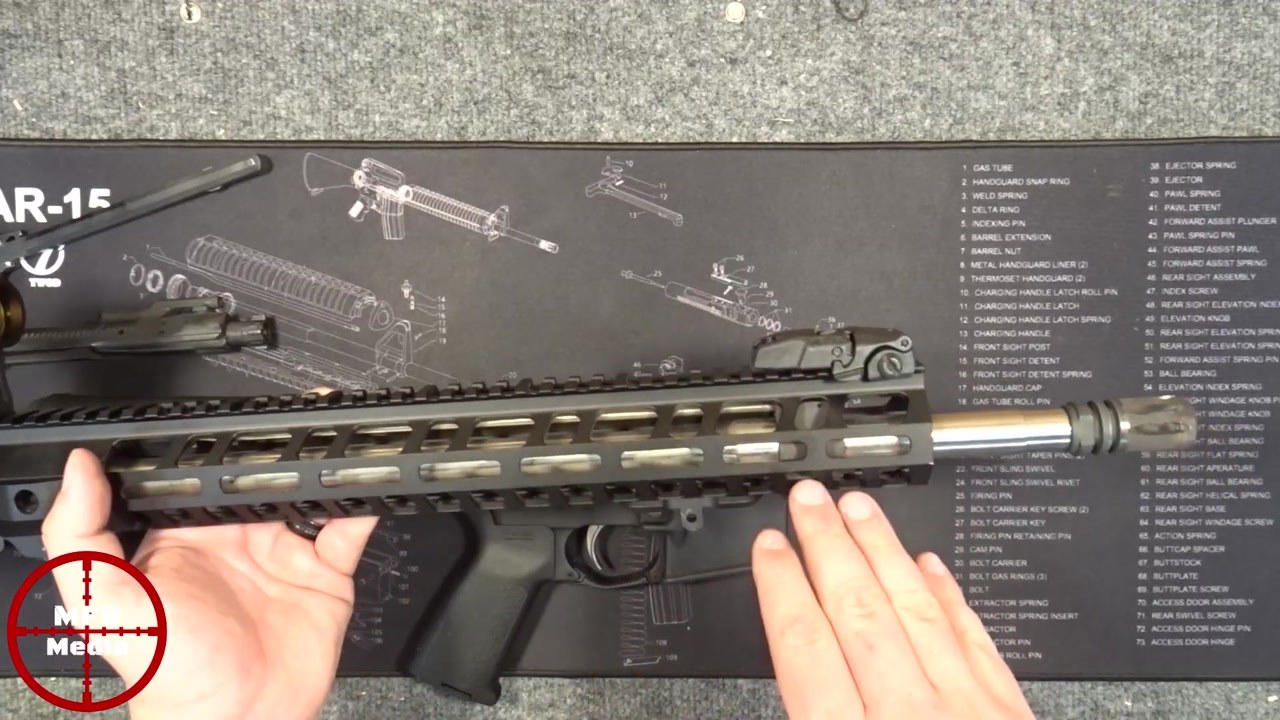
That's what you get for whatever price or sale you see it on. You'll see different packages, and a lot of the time the biggest difference between them is the rail itself. It might have no QD point, it might be cut differently, there are just differences in the rail. One more thing on this rail: it's put together very well. There are no rough surfaces and nothing grabbing you, so it just sits in your hand very well.
The specs
Here's what PSA lists today for the current version of this kit (SKU 5165450249). It matches the barrel, gas system, rail, bolt, and lower parts I covered in the video:
Manufacturer Specs
| Chamber | 223 Wylde |
|---|---|
| Barrel | 18 in., 416R stainless steel, A2 profile, no chrome lining |
| Twist rate | 1:7 |
| Gas system | Rifle-length, .750 in. low-profile gas block |
| Muzzle | 1/2-28 thread, A2 flash hider |
| Handguard | PSA 15 in. Lightweight M-LOK free-float rail |
| Upper receiver | Forged 7075-T6, M4 feed ramps |
| Bolt carrier group | Included; full-auto profile, Carpenter 158 steel bolt, staked gas key |
| Charging handle | Included |
| Sights | Magpul MBUS front and rear flip-up sights, black |
| Lower build kit | PSA MOE EPT lower build kit (PSA EPT fire control group) |
| Lower receiver | Not included |
Accuracy at 50 yards
Overall, I was pretty impressed with the accuracy. This was all at 50 yards, with not the most stable setup whatsoever. It was kind of windy, which doesn't really matter much at 50 yards, but the biggest thing is the stability of the rest, and it was not extremely stable. I'm not going to defend it, though. I'll just tell you I'm impressed.
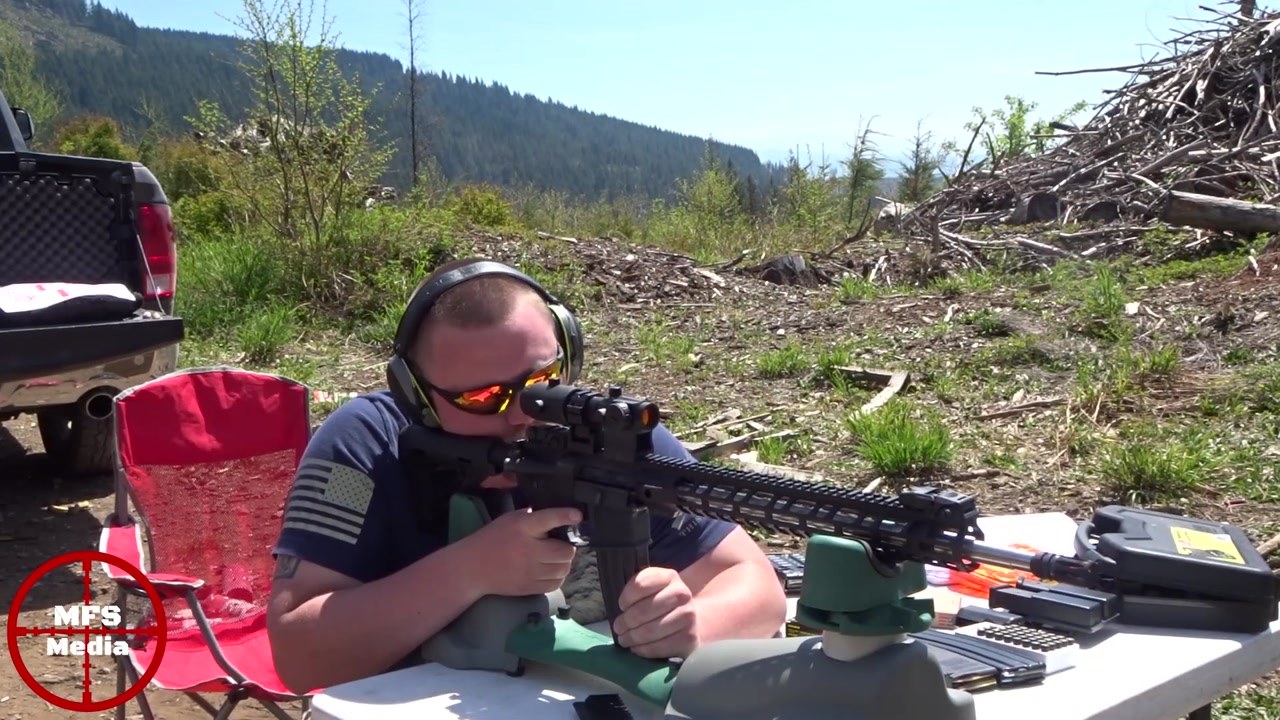
I do five-shot groups because I like to have as much shooting as possible involved, but I also always designate an outlier. That's because there's human error involved. I'm not hooking this up to a machine to get the best group. I'm shooting it myself, and to be straight up, I'm not the best shot in the world.
| Load | What I got at 50 yards |
|---|---|
| M855 62-grain | About 1.5 to almost 2 MOA |
| Federal 55-grain XM193 | About 1 to 1.5 MOA (one group around 1.25 MOA or slightly less) |
| Hornady Frontier 55-grain | Really consistent, basically 1 to 1.5 MOA |
| Tula 62-grain HP (steel case) | Four-shot groups, under MOA on most of them |
M855 62-grain. Mind you, this is a 1:7 twist barrel, so in theory the heavier-grain stuff should run slightly better through it. The two groups at the top I don't really pay attention to. The three to look at came out at basically 1.5 to almost 2 MOA, and if you open that up to 100 yards it's going to be even more. This was kind of older ammo I'd been holding on to.
Federal 55-grain XM193. I messed up here and shot a four-shot group and a six-shot group, so those kind of cancel each other out. The rest were standard five-shot groups: about 1 MOA, about 1.5 MOA, and one that's probably 1.25 MOA or slightly less. That's pretty impressive.
Hornady Frontier 55-grain. This is what the rifle was originally sighted in with, just a quick sight-in at 50 yards. You'll notice really consistent groups, basically 1 to 1.5 MOA, and in some cases pretty darn close to really nice.
Tula 62-grain hollow point. Here's something really crazy to me. This is the cheapest stuff you can buy in the store, steel-case Tula. I only had one box of it and just happened to have it with me, so I ran it. These are four-shot groups, and it's not a one-off. Canceling the outlier again, you've got under-MOA groups from the majority of them other than one five-shot group. It's incredible to me that the cheapest ammunition got the best accuracy out of this barrel.
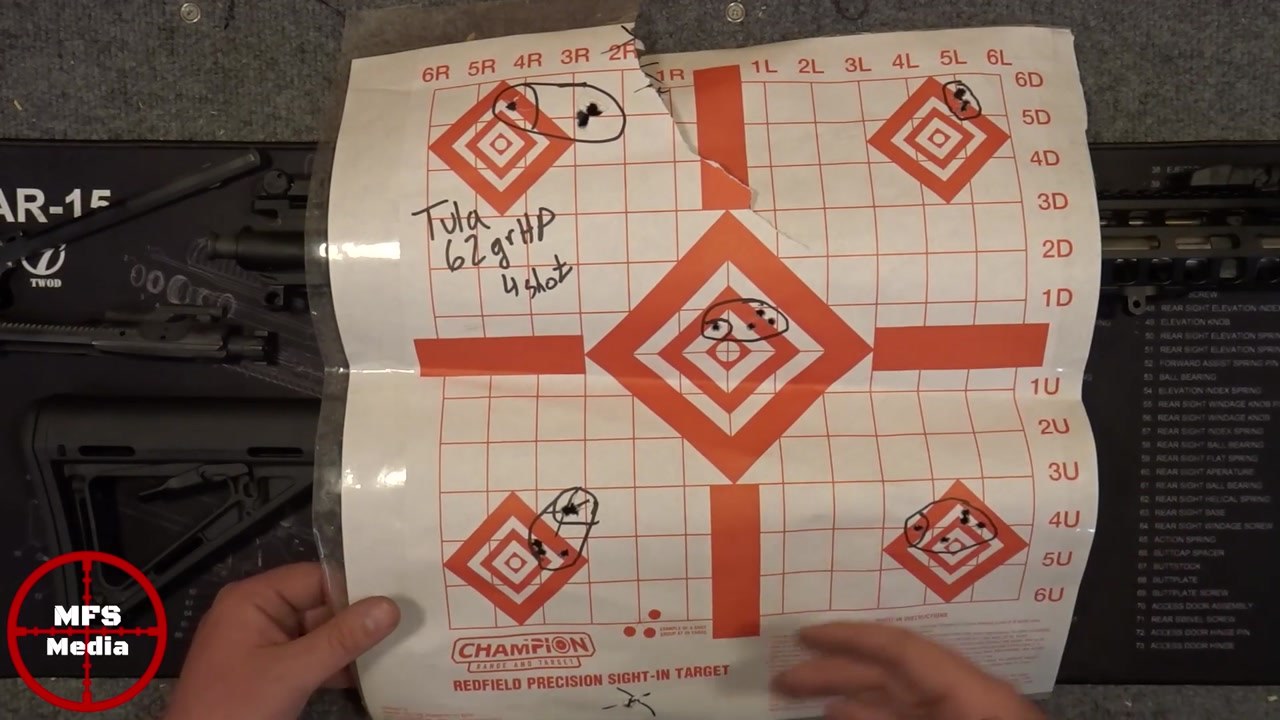
With that being said, I didn't use any super-quality ammunition through this, for no other reason than I didn't have it with me. If you were to run some nice 77-grain stuff, like what I used in my last review, I'd almost guarantee you're going to get sub-MOA at 100 yards. I didn't test that here, so treat it as my expectation, not a result.
Reliability
First thing I want to mention is the rifle-length gas system. With a rifle-length system you have more travel time for the gas, which in theory, with this longer barrel, should help with reliability and give you softer felt recoil.
The first 250 rounds through this rifle were shot suppressed. That's why it's so dirty, and I'll be cleaning it. 250 rounds suppressed, no issue whatsoever. I also shot about 250 rounds unsuppressed, and again, no issue whatsoever. That's about 500 rounds total.
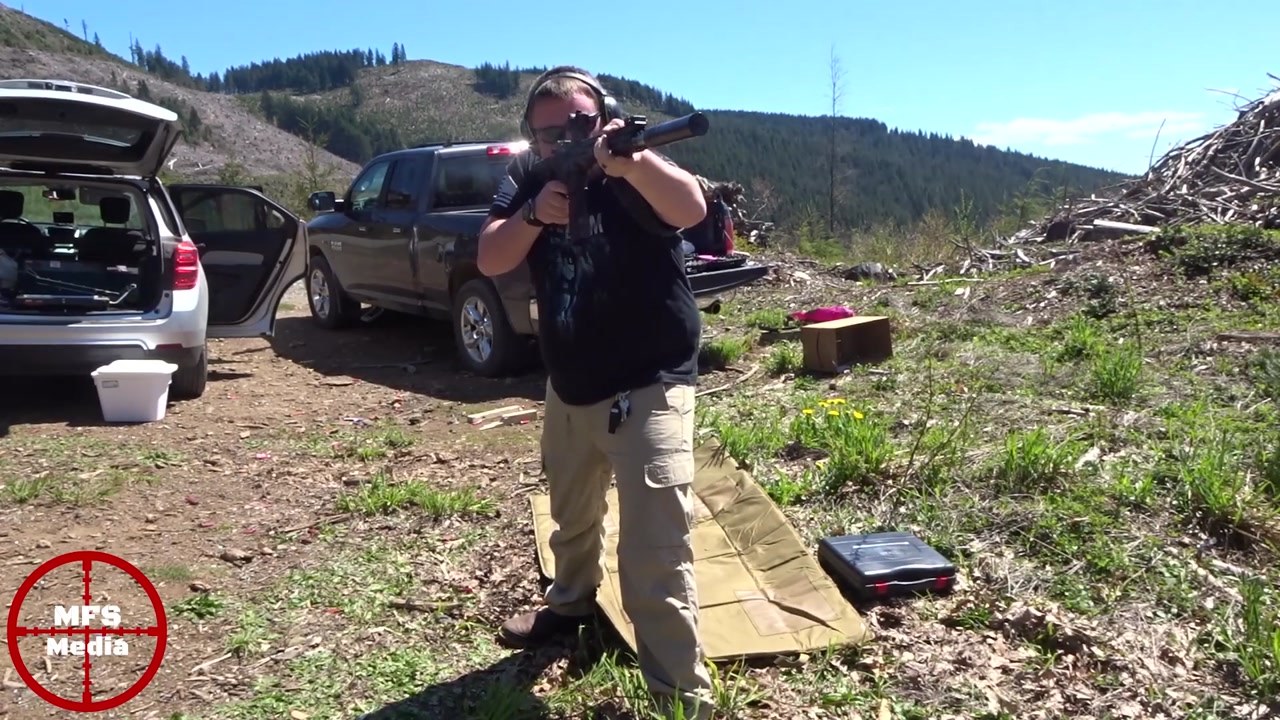
Pay attention to the background footage in the video and the consistency of the spent casings. They all go to the same spot. I have not had an issue with this rifle whatsoever, and I really like it.
What I'd use it for
Obviously you can use it for whatever you want, but two things come to mind that I think it's almost purpose-built for, for anybody on a budget.
Predator hunting. Coyotes, that sort of thing. With an 18-inch barrel you're going to get more velocity out of your .223/5.56, especially with lighter loads, and the groups with the lighter loads are more than acceptable for coyote hunting, especially at the price point. Know your state's regulations before you hunt with any rifle.
Entry-level competition. It's getting decent groups, and I think you'd have a good time with it in competition. The more you train and practice with it, the better you're going to get.
Bottom line
I give it a thumbs up. I've had no issues with it, and it's been fun to shoot. Because it has that rifle-length gas system, it's extremely flat shooting. There's almost no upward recoil, and almost no felt recoil on your shoulder, with it being a heavier gun with a rifle-length system shooting 5.56.
If this is something you're debating on, I hope this helps you make that decision. It's very nice for the money, and when you see it go on sale, I say go pick it up. Prices change, so check current pricing first.
Discussion Question
Have you built or shot one of PSA's .223 Wylde kits? What load shoots best out of your 1:7 barrel, and would you run one for coyotes?
This article is for entertainment and informational purposes only. It isn't professional, legal, or safety advice. Always check the facts, local laws and regulations, and manufacturer data for yourself, and use your own judgment before you hunt or handle any firearm or ammunition.
Sources
- MFS Media video: "Palmetto State Armory 18" .223 Wylde AR-15 Build Kit Review (Re-Upload)" (YouTube; original review May 2019)
- Palmetto State Armory, PSA 18" Rifle-Length .223 Wylde 1/7 Stainless Steel 15" Lightweight M-lok MOE EPT Rifle Kit w/MBUS Sight Set (SKU 5165450249)
- Palmetto State Armory, Snek-15 AR-15 stripped lower receiver (SKU 5165450094)
- Primary Arms Optics, MD-RBGII Classic Series Gen II Microdot